Rui Abreu

Prof. Rui Abreu is a Full Professor at FEUP and a leading researcher in software quality, focusing on automated testing, debugging, and self-adaptive systems. He also explores the intersection of quantum computing and software engineering, particularly in testing and fault localization for quantum programs. He holds a Ph.D. from TU Delft and an M.Sc. from the University of Minho. His work has earned multiple Best Paper Awards, including at ESEC/FSE2019 and ICSE2025. He has held roles at IST, PARC, and Google NYC, and co-founded DashDash, a no-code app platform.
Ross Duncan

Ross Duncan is the Head of Quantum Software at Quantinuum. He has responsibility across the software stack but mainly focuses on development tools for quantum software, notably including the TKET compiler. In his earlier career as an academic he was one of the inventors of the ZX-calculus, and the worked on the application of category theory, logic, and formal methods to quantum computing. He loves a good string diagram.
Michael Felderer

Prof. Michael Felderer is the Director of the Institute for Software Technology at German Aerospace Center (DLR) and full professor at the University of Cologne. His fields of expertise and interest include software testing and quality assurance, software engineering for AI, quantum and digital twin technologies as well as empirical and research software engineering. He was associate professor at the University of Innsbruck (Austria), guest professor at the Blekinge Institute of Technology (Sweden) as well as CEO of the academic spin-off QE LaB Business Services. His research is performed in close collaboration with organizations and companies, and directed towards the development and evaluation of efficient and effective methods to improve the quality, trustworthiness and value of software systems and processes. Michael Felderer has co-authored more than 150 publications and received 14 best paper awards. He is recognized by the Journal of Systems and Software (JSS) as one of the twenty most active established Software Engineering researchers world-wide in the period 2013 to 2020. For more information, visit his website at mfelderer.info.
Andriy Miranskyy

Andriy Miranskyy is an associate professor in the Department of Computer Science at Toronto Metropolitan University (formerly Ryerson University), Canada. His research interests are in the area of mitigating risk in software engineering, focusing on large-scale software systems (such as cloud or quantum computing systems). Andriy received his Ph.D. in Applied Mathematics at the University of Western Ontario, Canada. He has 20+ years of software engineering experience in various industries.
Mohammad Reza Mousavi

Mohammad Reza Mousavi is a professor of Software Engineering and co-director of King's Quantum at King's College London. He obtained his PhD from Eindhoven University of Technology, Netherlands. Prior to joining King's in 2021, he held positions at Reykjavik University, Eindhoven University of Technology, Delft University of Technology, Halmstad University, Chalmers University of Technology, and the University of Leicester. His areas of interest are in software and system testing, particularly applied to hybrid quantum-classical systems and cyber-physical systems.
Hausi A. Müller

Hausi A. Müller is a professor of Computer Science at the University of Victoria, British Columbia, Canada, and adjunct professor at Icesi University in Cali, Colombia. He was the associate dean of research, Faculty of Engineering and Computer Science (2009-2019).
With his research group, he collaborates extensively with industry as an international expert in software engineering, quantum computing, adaptive systems, and intelligent cyber-physical systems. He is a principal investigator (PI) of an NSERC Quantum Consortium Alliance Grant (2024-29) on Distributed Quantum Computing. He is a PI on an NSERC Collaborative Research and Training Experience (CREATE) Grant on Quantum Computing. He was a PI on an IBM CAS Project on Quantum Problem Solving and Algorithm Design on the IBM Quantum Qiskit platform.
He is the inaugural chair of the IEEE Quantum Technical Community (2024-25). He served as Co-Chair of IEEE Future Directions Quantum Initiative (2019-23). He is co-founder and Steering Committee Chair (2020-25) of the IEEE International Conference on Quantum Computing & Engineering (QCE)—IEEE Quantum Week. He served as General Chair of QCE23, QCE21, and QCE20. He serves as Program Board Chair for QCE25 & QCE24, and was Finance Chair for QCE22. He was Vice President of IEEE Computer Society (CS) Technical and Conferences Activities (T&C) Board (2016–2018), member of the CS Board of Governors (2015–2017), chair of TCSE, the CS Technical Council on Software Engineering (2011-2015). He received the 2024 IEEE Computer Society (CS) Technical & Conference (T&C) Activities Board Distinguished Leadership Award "for his unwavering commitment and exceptional contributions to software engineering, quantum computing, and IEEE CS's technical activities."
Juan Manuel Murillo

Professor Murillo is currently a Full Professor in the field of Software Engineering at the University of Extremadura (Spain). He develops his research activity within the Quercus Software Engineering Group which he contributed to create in 1995. Currently, he leads the SPILab (Social and Pervasive Innovation Lab) which is focused on the development of services technology in the Computing Continuum. Professor Murillo coordinates the Spanish network of Services Science and Engineering. In all his research, the application areas were that of health and aging. From 2018, the practical problems faced in the field of health have led him to explore the practical development of software for quantum systems and its integration with classical service-oriented ones. This is the way in which what it was a hobby for years become a new research direction in the lab. In this field, the SPILab collaborated in the development of the QHealth project, which dealt with the modeling of systems in the field of pharmacogenomics for the development of precision medicine. Currently, the lab leads the QSERV Project, an effort developed jointly with the University of Castilla-La Mancha and the University of Deusto to produce the service technology that supports building hybrid classical/quantum systems. This project has been granted by the Spanish Ministry of Science and Innovation. Through this activity, SPILab is developing research in collaboration with different groups around the world whose general interest is to contribute to the development of Quantum Software Engineering (QSE).
Genki Okano

Genki Okano is a quantum application engineer at Classiq Technologies. He is responsible for customer support, such as lecture delivery or developing use cases in the APAC region, and so his research interests cover a wide range of quantum applications, including chemistry, finance, machine learning, etc. He obtained his Ph.D from Keio University in Japan. Prior to joining Classiq in 2024, he held positions as a quantum technology researcher at RIKEN, TOYOTA, and Fujitsu.
Fuyuki Ishikawa
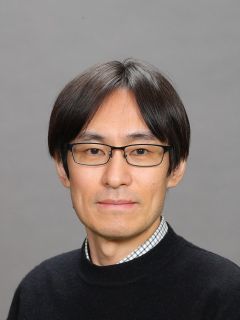
Fuyuki Ishikawa is an Associate Professor at National Institute of Informatics, Japan. He also works with Sokendai University and University of Electro-Communications. His research interests in software engineering and smart systems. His recent work focuses on dependability of emerging smart systems, including automated test generation, fault analysis, automated repair, and formal modeling of machine learning-based systems and automated driving systems. He is leading the JST-MIRAI eAI project for reliable deep learning-based systems and the TopSE program for cultivating industrial engineers.
Shinobu Saito

Shinobu Saito is a Distinguished Research Engineer in the Computer and Data Science Laboratories at the NTT Corporation (Tokyo, Japan). His research interests are software requirements engineering, design recovery, business modeling, and business process management. He received his Ph.D. in system engineering at Keio University (Yokohama, Japan) in 2007. Saito was a visiting researcher at the Institute for Software Research (ISR) at the University of California, Irvine from 2016 to 2018.
Yutaka Takita

He graduated from the Department of Electrical Engineering, University of Tokyo in 2000, and received a Master's degree in Electrical, Information and Communication Engineering from the Graduate School of Engineering, University of Tokyo in 2002. He Joined Fujitsu Laboratories Ltd. in 2002 and currently engaged in the research related to the social application of quantum computers. Now, he is Senior Research Manager at Quantum laboratory in Fujitsu.
Hironori Washizaki

Hironori Washizaki is the 2025 IEEE Computer Society (CS) president. He is a professor and the associate dean of the Research Promotion Division at Waseda University. He is a visiting professor at the National Institute of Informatics and an advisor at the University of Human Environments. He also works in the industry as an outside director and advisor at eXmotion and SI\&C. He has led professional and educational activities at the IEEE CS, including the evolution of the Guide to the Software Engineering Body of Knowledge (SWEBOK) and the CS Juniors program. He has led many academia-industry joint research and large-funded projects in systems and software requirements, design, reuse, quality assurance, and AI software engineering. He leads a professional IoT/AI/DX education project called "Smart SE." Since 2015, he has been the convenor of ISO/IEC/JTC1/SC7/WG20 to standardize bodies of knowledge and certifications in systems and software engineering. He has been the IPSJ SIG Software Engineering (SIGSE) chair since 2021.
Nobuko Yoshida

Nobuko Yoshida is Christopher Strachey Chair of Computer Science in University of Oxford. She is an EPSRC Established Career Fellow and an Honorary Fellow at Glasgow University. Last 10 years, her main research interests are theories and applications of protocols specifications and verifications. She introduced multiparty session types [ POPL'08, JACM ] which received Most Influential POPL Paper Award in 2018 (judged by its influence over the last decade). This work enlarged the community and widened the scope of applications of session types, e.g. runtime monitoring based on Scribble (co-developed with Red Hat) has been deployed to other projects such as cyberinfrastructure in the US Ocean Observatories Initiative (OOI); and widened the scope of her research areas. She received the Test-of-time-award from PPDP'24 and the best paper awards from CC'20, COORDINATION'23 and DisCoTech'23. She received the third Suffrage Science Awards for Mathematics and Computing from MRC for her STEM activity. She is an editor of ACM Transactions on Programming Languages and Systems, ACM Formal Aspects of Computing, Mathematical Structures in Computer Science, Journal of Logical Algebraic Methods in Programming, and the chief editor of The Computer-aided Verification and Concurrency Column for EATCS Bulletin.
Jianjun Zhao

Jianjun Zhao is a Professor at Kyushu University, Japan, where he leads a research group working at the intersection of software engineering and quantum computing. His work focuses on building reliable and testable quantum software systems. He has made extensive contributions to program analysis, software testing, and quantum software engineering, and actively promotes collaboration between classical and quantum software communities.